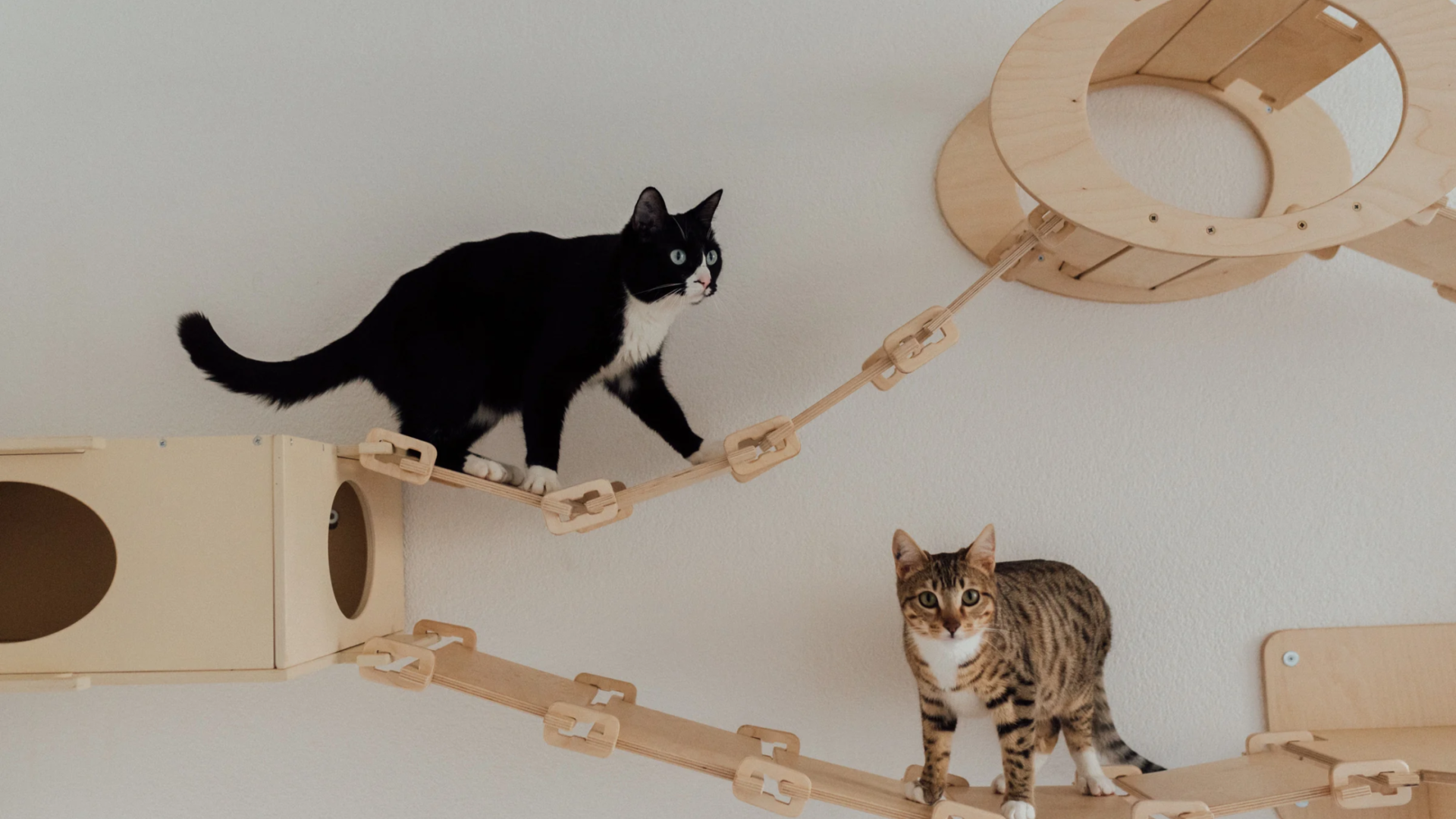

Lately, I’ve been hearing more about an addition I’d never given much thought to before: catios. If you haven’t come across one yet, a catio is an enclosed outdoor space for cats. Some are little boxes attached to a window that you can get off of Amazon, while others look like elaborate screened porches with climbing shelves and places for cats to lounge in the sun.
As someone who spent years looking at homes through a real estate lens, I had a question when I first started hearing about these structures: Could a catio increase a home’s value?
After all, homeowners spend quite a bit of money making their properties more comfortable for their pets. It’s worth considering how those improvements might look to the next person who owns the house.
Do catios add value to a home?
The short answer is that a catio could make your home more attractive to certain buyers, but there’s no reliable evidence that installing one will increase your home’s appraised value. During my real estate career, I saw plenty of features that buyers loved but appraisers had a harder time assigning a dollar value to. An unusual home improvement might help sell a house without necessarily raising its appraised price. A catio falls into that category.
Suppose you’re selling a home with a beautiful, professionally constructed catio that connects to the living room. A buyer with two indoor cats might be thrilled to find a house where their pets can safely enjoy the backyard. That buyer may even prefer your property over a similar home without one. But a buyer who doesn’t own cats and has no interest in getting one might see that same enclosure as an inconvenience, especially if it takes up valuable patio space.
I wouldn’t advise anyone to spend several thousand dollars on a catio with the expectation of getting that money back at closing. But if you already want one for your cats, there are good reasons to think carefully about its design and how it might appeal to a future buyer.
How a catio could make your home more appealing to buyers
Even if we can’t put a specific dollar figure on a catio’s resale value, I can see several ways a well-built enclosure could work in a seller’s favor.
1. It could catch the attention of buyers with cats
Imagine touring several houses over a weekend. They’re all reasonably similar in price and square footage, but one has an attractive catio just outside the kitchen window. If you have a cat that spends half its day staring longingly into the backyard, that feature could be pretty appealing.
Of course, most buyers aren’t going to choose a house based on the catio alone. But I’ve seen relatively small details help buyers form an emotional connection with a property, particularly when the houses they’re considering are otherwise fairly similar.
2. It can give that extra yard space a purpose
Houses often come with awkward outdoor spaces. A narrow side yard, for example, can be difficult to use. It may be too small for a patio table, and there might not be enough sunlight to grow much of anything.
That kind of spot could be ideal for a catio.
An enclosure running alongside the house can give cats room to explore without taking up the main backyard. Some homeowners also connect the structure to a window, allowing their cats to come and go without needing someone to open a door.
Outdoor space is valuable to buyers, particularly here in Colorado, where a pleasant backyard can get plenty of use during the warmer months. A catio that fits comfortably into the property has a better chance of being viewed as an asset rather than something that needs to be removed.
3. A well-designed catio can make your backyard look better
I’ve seen photos of custom catios that look like miniature screened porches, with wooden framing that matches the home’s trim and roofing that blends nicely with the house. Some even have landscaping around the outside, which helps the enclosure feel like a permanent part of the yard.
Then there are the less attractive versions. A large wire cage attached to the side of a house probably won’t do much for its curb appeal, especially if the materials have started to rust or deteriorate. If you’re considering a catio, I’d spend some time looking at designs that complement your home’s architecture. Also, a catio in the backyard may have little effect on your home’s appearance from the street, while one attached to the front of the house could change its curb appeal considerably.
4. It offers a safer way for indoor cats to enjoy the outdoors
Depending on where you live, wildlife like coyotes and mountain lions or even busy roads can be a concern for pets.
A secure catio gives indoor cats a way to spend time outside without roaming freely through the neighborhood. It also gives cats a way to enjoy some fresh air without wandering into neighboring yards or digging around in someone’s garden. And homeowners don’t have to spend their evenings looking for a missing cat.
5. Some catios could be repurposed by future owners
If you eventually sell your home, there’s a good chance the next owner won’t have cats. What happens to the enclosure then?
One option is to choose a design that could serve another purpose later. Depending on its construction, a walk-in catio might be converted into a screened sitting area or a protected space for growing plants. Of course, that depends on the structure. A catio built with narrow climbing shelves and small access tunnels probably won’t be very useful to someone who wants a screened porch.
I’d favor a design that gives the next homeowner some flexibility, especially if you’re planning to spend a significant amount of money on it.

What makes a catio a good home improvement investment?
If you’re installing a catio primarily for your own enjoyment, you have plenty of freedom to design something that suits your cats. But if resale is somewhere in the back of your mind, there are a few things worth considering.
Quality materials and professional construction
The materials that make up the catio need to hold up to the local weather. Each area has its “thing”: snow loads, strong sunlight, moisture, what have you. You don’t want an enclosure that starts looking worn out after a couple of seasons. Also, a poorly installed enclosure could create problems well beyond its appearance, especially if the installation allows water to get behind siding.
A future buyer may have no idea what a catio originally cost. They’re going to judge the structure by how it looks and how well it appears to have been maintained.
Choose a design that fits your home
I would approach a catio much like any other exterior addition. Look at the house and ask, what materials are already used outside? What color is the trim? Would a wooden structure look better than a metal one?
Steven Blevin, an expert catio builder at Cozy Cat Catios in San Jose, CA, has this advice:
“One thing I always tell homeowners is to think about how the catio will look even when there aren’t any cats in it. You want something that fits the house and looks good in the yard. A well-designed catio should feel like it belongs there.”
For example, a house with natural wood siding might look great with a catio built from stained lumber. A modern home with dark window frames might be better suited to a simpler enclosure with matching metal framing.
Also think about size and what the structure looks like when viewed from inside the house. If the catio is blocking a pleasant view through the living room window, you may regret the placement long before you decide to sell.
Keep the rest of your yard usable
When buyers tour a house, they’re often imagining how they’ll use the outdoor space. If the catio takes up most of the yard, it could make the property less appealing to those buyers. Fortunately, cats don’t need a huge amount of ground space to enjoy an enclosure. Many catios make good use of vertical room with elevated platforms and climbing areas.
Personally, I’d rather see a thoughtfully designed enclosure along the edge of a property than a large structure sitting right in the middle of the lawn. It leaves more options for the next homeowner, and that’s generally a good thing when you’re thinking about resale.
Could a catio hurt your home’s resale value?
As much as I like the idea of a catio, I can think of situations where having one might work against you as a seller. Consider:
- How much space it takes up. A large enclosure that dominates a small backyard could turn off buyers (even someone who loves cats!) who would rather use that area for entertaining or gardening.
- Poor construction. If a catio looks too DIY, buyers may wonder what it will cost to remove.
- Building requirements/permitting. Depending on the size and design, a catio may require a permit. HOAs tend to have their own restrictions, too. Unpermitted additions can create headaches during a sale.
Catios can still be a good idea for you! I’d simply give it the same consideration as any other permanent improvement to your property.
How much does a catio cost, and will you get your money back?
Catio prices vary quite a bit, ranging from a few hundred for a small window box to thousands for a large, custom walk-in situation. Attaching to an existing patio is a different project than constructing a freestanding structure on uneven ground. Get a quote, maybe even from a few different companies, before deciding how much to spend.
What kind of return on investment can you expect?
It’s hard to say. With renovations like kitchen updates, there’s a considerable amount of real estate research comparing remodeling costs with resale values. Catios don’t have that kind of track record.
I haven’t found reliable data showing that homes with catios sell for a certain percentage more than comparable homes without them. If you spend $4,000 installing a catio, there’s no guarantee that buyers will pay an additional $4,000 for the house because of that enclosure.
If you plan to stay in the house for another five or ten years, you’ll have plenty of opportunities to enjoy the improvement before selling. Your cats get an outdoor space, and you get the convenience of letting them outside without worrying about them wandering off.
It’s similar to how I think about many other personalized home improvements. You don’t necessarily need to recover every dollar at resale for the project to have been worthwhile.
If the catio eventually helps attract a buyer, that’s a nice bonus!
Should you install a catio before selling your house?
If you’re getting ready to put your home on the market and you’re considering installing a catio specifically to increase its value, I’d probably recommend putting that money elsewhere.
There are usually more predictable ways to prepare a property for sale. Fresh paint, landscaping improvements, or taking care of deferred maintenance are likely to appeal to a broader group of buyers.
On the other hand, if your home already has a catio, I wouldn’t rush to remove it.
Make sure it’s in good condition before listing the property. Repair any damaged screening and clean up the surrounding area. If it’s an attractive structure, ask your real estate agent to include a photo in the listing.
I would also mention it in the property description. Buyers searching for pet-friendly homes may appreciate knowing that the enclosure is there.
Frequently asked questions about catios and home value
Does a catio count toward a home’s square footage?
Generally, no. A typical catio is an outdoor enclosure and doesn’t qualify as finished interior living space.
Even a large catio attached to the house wouldn’t ordinarily be included in the home’s reported living area. Requirements for calculating square footage vary, but an outdoor enclosure typically won’t meet the standards used for finished residential space.
Do you need a permit to install a catio?
Possibly. Permit requirements depend on where you live and the type of structure you’re installing. Before starting construction, check with your local building department. If you live in a community with an HOA, review its rules for exterior modifications as well.
Are permanent catios better for resale than portable catios?
A well-designed permanent catio may look more attractive and substantial than a portable enclosure, but that doesn’t necessarily mean it adds more resale value.
Portable catios have one obvious advantage: they’re generally easier to remove when you move. A permanent catio may appeal more to a buyer who wants an enclosure that’s ready to use. The better option depends on your property and how long you expect to live there.
Can you take your catio with you when you move?
That depends on how the catio is installed and what your real estate contract says. A portable enclosure that simply sits on the patio is generally easier to treat as personal property. A catio permanently attached to the house may be considered a fixture, which could mean it’s included in the sale unless the contract says otherwise.
If you intend to take your catio with you, talk with your real estate agent before listing the house. Any exclusions should be clearly documented in the sale agreement so buyers know what they’re getting.
Will buyers pay more for a house with a catio?
Some might, particularly buyers who already want an outdoor enclosure for their cats. If you’re curious about how a catio might affect your particular property, ask a local real estate agent who’s familiar with your neighborhood. They’ll have a better sense of what buyers in your area tend to appreciate.
So is a catio worth the investment?
If you have cats that would love some outdoor time, a catio could be a worthwhile addition. I’d pay attention to the construction quality and choose a design that works with the house rather than against it.
Will it raise your home’s selling price someday? Maybe, but I wouldn’t count on it.
In the meantime, you get to enjoy watching your cats explore their own little outdoor retreat. And if you’re lucky enough to live somewhere with a beautiful view, perhaps they’ll appreciate it as much as you do.